


When it’s time to cool your home, you’ll likely face a big question: should you stick with a traditional central AC unit or switch to a ductless mini-split? In fact, the answer depends on your home’s layout, your existing ductwork, your budget, and how you use each space. Therefore, understanding how these two systems differ helps you make a confident decision.
Central air conditioning has been the standard for decades, and for good reason. However, ductless mini-splits have grown quickly in popularity because they solve problems that ducted systems struggle with. Moreover, each option has clear strengths and real limitations. Consequently, this complete comparison walks you through the key differences so you can choose the system that fits your home.
How Central AC Works
A central air conditioner uses an outdoor condenser and an indoor air handler connected by refrigerant lines. Additionally, the indoor unit pushes cooled air through a network of ducts that run through your attic, crawl space, or walls. Furthermore, supply vents deliver that air to each room, while return vents pull warm air back to the system.
Because one system serves the whole home, central AC is designed for broad, even coverage. Therefore, it works especially well in homes that already have healthy ductwork and open floor plans with consistent cooling needs.
How Ductless Mini-Splits Work
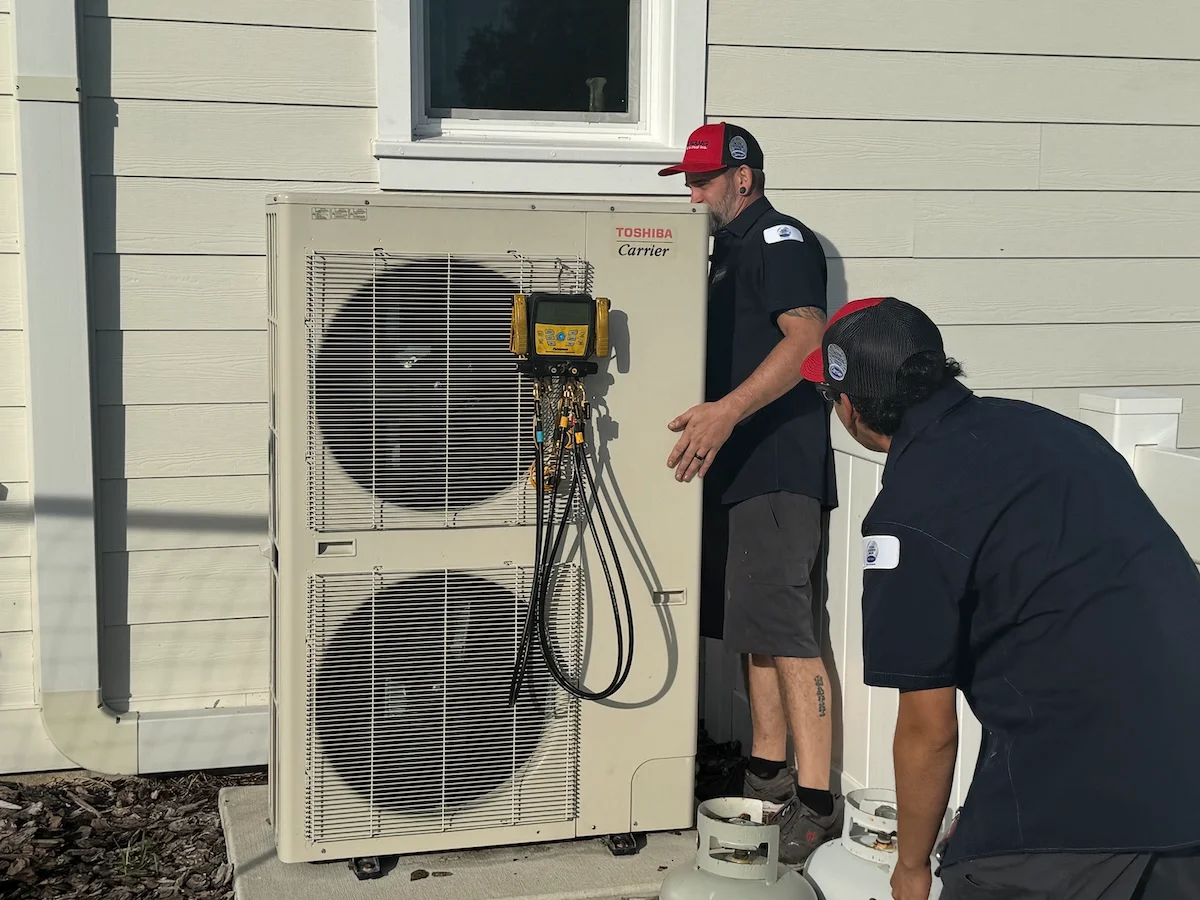
A ductless mini-split also has an outdoor compressor, but it connects to one or more indoor units through small refrigerant lines routed through a single opening in the wall. Additionally, each indoor unit mounts on a wall, ceiling, or floor and cools the space around it directly. Furthermore, most mini-splits operate as heat pumps, so they provide both cooling and heating.
Single-zone mini-splits serve one room, while multi-zone systems connect several indoor units to one outdoor unit. Therefore, you can cool or heat exactly the areas you use without conditioning the entire house.
Installation: Ductwork Makes the Difference
Installation is where these two systems differ most. Central AC depends on ductwork, and if your home already has sound ducts, replacing the equipment is usually straightforward. However, if you have no ducts, or if the existing ducts are leaky, undersized, or poorly routed, the project becomes far more complicated.
Ductless systems skip most of that work. Because they don’t need ducts, installation typically involves mounting indoor units, running a line set, and connecting power. As a result, mini-splits are often the practical choice for homes without existing ductwork, room additions, converted garages, and older homes where running new ducts would damage finished walls or original features.
Here is a quick comparison of installation considerations:
- Central AC: Requires working ducts, and may need duct repairs or new ductwork
- Ductless: Needs a wall penetration for refrigerant lines and a nearby power source
- Central AC: Usually replaces equipment in place with minimal disruption
- Ductless: Often completed in a single day for a single-zone system
Upfront Cost: What to Expect
Costs vary widely based on home size, system capacity, efficiency, and installation complexity. Nevertheless, general ranges can help you plan. A central AC replacement in a home with good ductwork often falls in the range of several thousand dollars. However, if the home needs new or extensively repaired ducts, the total can rise substantially.
Ductless costs depend on the number of indoor units. A single-zone system typically costs less upfront than a central system, but adding zones increases the price with each additional indoor unit. Therefore, multi-zone systems can become expensive for whole-home coverage, even though they remain cost-effective for targeted cooling.
The most useful comparison is total cost for your specific home. Consequently, request written quotes that itemize equipment, labor, electrical work, and any duct repairs, so you can compare both options fairly.
Energy Efficiency and Operating Costs
Efficiency is one of the strongest arguments for ductless systems. Moreover, mini-splits use inverter-driven compressors that adjust speed to match demand rather than cycling fully on and off. Additionally, they don’t lose cooled air through leaky ducts, which can waste a meaningful share of energy in ducted homes.
Central AC has improved significantly as well. Modern variable-speed central systems can deliver excellent efficiency, especially when they’re properly sized and paired with sealed ductwork. However, if the existing ducts leak heavily, even a high-efficiency central system can underperform.
For many homeowners, the efficiency gap narrows when ducts are in good shape. Therefore, the right choice often depends on the condition of your existing system rather than on the equipment alone.
For more background on how cooling systems use energy and how to evaluate efficiency ratings, the U.S. Department of Energy’s heating and cooling guide offers clear, unbiased information.
Comfort and Zoning
Comfort is where ductless systems often shine. Because each indoor unit controls its own zone, you can keep bedrooms cooler at night while leaving living areas warmer during the day. Furthermore, family members can set different temperatures in their own spaces without arguing over the thermostat.
Central AC delivers air through shared ducts, so temperatures can vary from room to room. Consequently, rooms at the end of long duct runs or rooms with lots of sun exposure may stay warmer than the rest of the house. Zoning dampers can improve this, but they add cost and complexity to a ducted system.
Noise is another comfort factor. Ductless indoor units operate very quietly, often at levels that won’t disturb conversation or sleep. Central systems produce some noise at the air handler and through the vents, though modern units are considerably quieter than older models.
Indoor Air Quality and Maintenance
Air quality depends on filtration, humidity control, and how clean the system remains. Central AC circulates air through ducts, which means dust, allergens, and contaminants can accumulate in ductwork over time. Therefore, regular filter changes, duct inspection, and occasional duct cleaning matter a great deal.
Ductless systems avoid duct contamination entirely, since there’s no duct network to collect dust. However, indoor units still need regular filter cleaning and periodic coil service to prevent mold and odor problems. Consequently, both systems require consistent maintenance, though the tasks differ.
Maintenance needs also vary by system type. Central systems usually require professional service once or twice a year, along with filter changes. Ductless units need regular filter cleaning by the homeowner and professional checkups to keep refrigerant levels, electrical connections, and drainage in good order.
Lifespan and Long-Term Value
Both systems can last many years with proper care. Central AC systems often serve for roughly 15 to 20 years, while ductless systems commonly last a similar span. Nevertheless, lifespan depends heavily on installation quality, maintenance habits, and climate.
Long-term value also includes how the system affects your home. A well-designed ductless installation can add comfort to a room that never had cooling before. Meanwhile, a new central system can improve the value of a home that previously lacked air conditioning altogether. Therefore, consider how each option fits your plans for the property.
Which System Is Right for Your Home?
Choosing between central AC and ductless often comes down to a few practical questions:
- Do you already have good ductwork? If yes, central AC is usually the simpler path.
- Is your home without ducts or planning an addition? Ductless is often the better fit.
- Do certain rooms run too hot or too cold? Ductless zoning can solve those problems directly.
- Do you want to cool and heat with one system? Ductless heat pumps handle both well.
- How important is upfront cost? Compare quotes carefully, since multi-zone ductless systems can add up.
Answering these questions usually reveals a clear direction. However, a professional evaluation is still valuable, because the right answer depends on measurements and conditions that only an on-site inspection can confirm.
Common Mistakes to Avoid
Homeowners sometimes make avoidable errors when choosing between these systems. Watch for these pitfalls:
- Choosing equipment without checking ducts: Leaky ducts can undermine even a premium central system
- Undersizing or oversizing: Both central and ductless systems need proper load calculations
- Ignoring zone needs: Buying a single-zone unit for a multi-room problem leaves gaps in comfort
- Skipping maintenance: Dirty filters and clogged drains cause problems in both system types
- Comparing quotes unevenly: Make sure each quote includes the same scope of work
Avoiding these mistakes protects both your comfort and your budget.
Why Choose Veterans AC and Heat
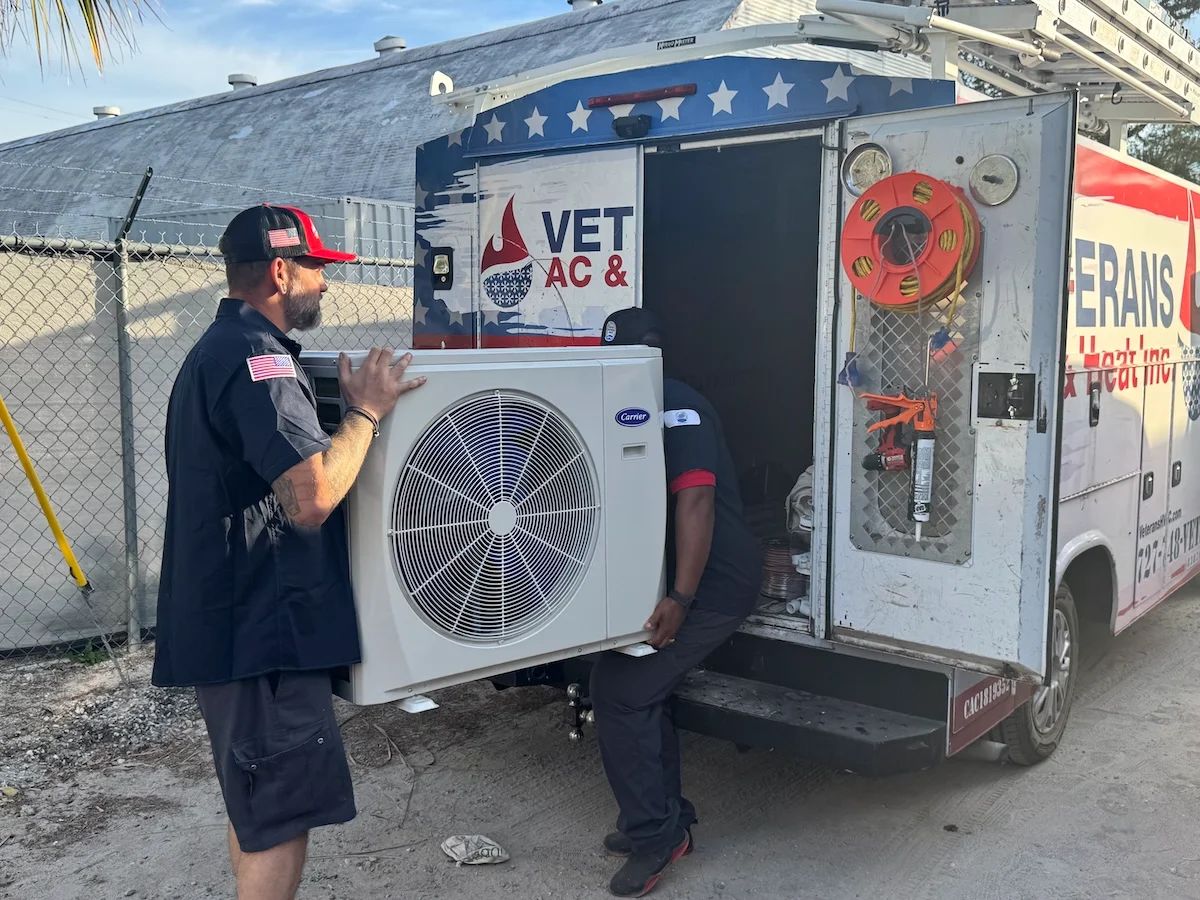
At Veterans AC and Heat, we help homeowners weigh central and ductless options honestly. Our team evaluates your ductwork, measures your home’s cooling loads, and explains the trade-offs in plain language. Therefore, you get a recommendation based on your home, not a sales pitch.
If a ductless system makes sense for your space, we can help you plan the right layout for indoor units and outdoor placement. Moreover, if your existing central system is the better fit, we can recommend duct improvements that boost performance. For a deeper look at ductless options, read our mini-split AC installation guide. You can also review our guide to signs you need AC replacement if you’re deciding whether to upgrade now.
Conclusion
Central AC and ductless mini-splits both cool your home effectively, but they suit different situations. Central systems work best when your home already has healthy ductwork and you want even coverage throughout. Ductless systems shine when ducts are missing or damaged, when you need zoned comfort, or when you’re adding space.
The right choice depends on your ductwork, layout, budget, and comfort goals. Therefore, compare total costs, efficiency, and installation requirements before deciding. Contact Veterans AC and Heat today to schedule an evaluation. Subsequently, our team will help you determine which system delivers the best comfort and value for your home.


